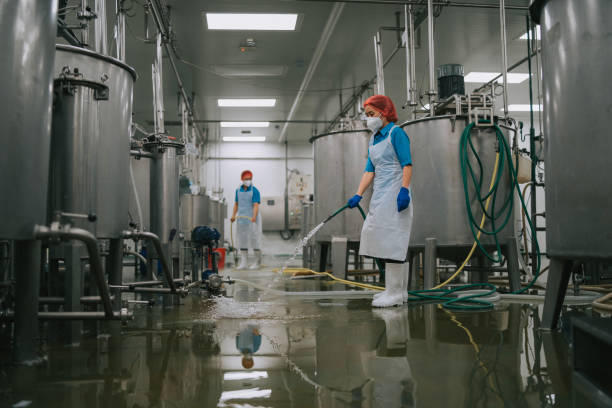
Factories are honestly a different universe compared to normal offices. You walk in and there’s dust floating like it owns the place, machines humming louder than your thoughts, and floors that have probably seen more oil spills than a roadside mechanic shop. That’s why Industrial Factory Cleaning Services aren’t just some optional extra companies add when audits are coming — they’re kind of the backbone of keeping operations safe and actually productive. I didn’t realize how serious this was until I visited a small manufacturing unit once and nearly slipped within five minutes. The manager laughed and said, Yeah, happens daily. That’s when it clicked… cleaning in factories is not about looking nice, it’s about survival and efficiency.
Why factory cleaning feels completely different from regular cleaning
People sometimes assume cleaning is just mopping and wiping. I used to think that too, honestly. But industrial environments are messy in very specific ways. Metal dust, chemical residue, grease buildup, packaging waste — all of it behaves differently. You can’t just throw water on an oil-coated floor and call it done. That’s like trying to fix a leaking pipe with tape… looks helpful for five minutes and then chaos.
There’s also a weird psychological thing happening. Workers actually perform better in cleaner environments. A study I read somewhere (don’t quote me exactly, but it stuck with me) suggested productivity can drop by almost 5–7% in cluttered industrial spaces because people subconsciously move slower or become more cautious. Makes sense though. If you’re constantly watching your step, your brain isn’t fully focused on work.
And lately on LinkedIn and even Reddit threads, factory managers keep talking about safety audits becoming stricter. Apparently inspectors now look closely at cleaning logs and maintenance hygiene. So yeah, cleaning has quietly turned into a compliance issue, not just housekeeping.
Safety isn’t dramatic until something goes wrong
One thing people underestimate is how small messes turn into big problems. Dust accumulation near machinery can cause overheating. Grease buildup becomes a fire risk. Even something basic like blocked walkways increases accident chances. I remember seeing a viral clip on social media where a forklift slid because of an unnoticed spill — comments were full of people saying, Why wasn’t that cleaned earlier? Easy question after the fact.
Factories operate like financial systems in a way. Think of cleanliness like regular savings deposits. Small, consistent effort prevents a huge costly breakdown later. Skip maintenance, and suddenly you’re paying the equivalent of credit card interest — downtime, repairs, injuries, and insurance claims.
And downtime? That’s expensive. Some manufacturing units lose thousands per hour when production stops. Cleaning suddenly doesn’t sound like an expense anymore; it sounds like risk management.
The hidden efficiency boost nobody talks about
Here’s something I didn’t expect when talking to a plant supervisor last year. He told me machines actually last longer in cleaner environments. Dust and residue slowly damage components, especially moving parts. When cleaning routines improved, maintenance calls dropped noticeably. It’s kind of like keeping your laptop fan clean — ignore it and performance slowly dies, but you don’t notice until it’s too late.
There’s also workflow efficiency. Clear floors mean smoother movement of materials. Organized spaces reduce searching time. Workers waste less energy navigating obstacles. It sounds small, but small time losses multiplied across hundreds of shifts become massive.
I’ve even seen employees take more pride in their workspace when it’s maintained properly. Sounds cheesy, but humans are weirdly influenced by environment. Clean space equals someone cares, messy space equals why should I bother.
What modern industrial cleaning actually looks like now
Cleaning today isn’t just people with mops. Equipment matters a lot. Industrial vacuums designed for hazardous particles, pressure washing systems, degreasing solutions, and specialized floor scrubbers are becoming standard. Some facilities even schedule cleaning around production cycles so operations don’t slow down.
There’s also growing attention toward eco-friendly cleaning solutions. Companies are trying to reduce harsh chemical usage because workers spend long hours inside these facilities. Funny enough, sustainability conversations — which used to feel like marketing talk — are now practical decisions. Less chemical exposure means fewer health complaints, fewer sick days, and better morale.
On social media, especially manufacturing communities, people often joke that a clean factory is a quiet factory. Not literally quiet, obviously, but smoother operations mean fewer emergency noises, alarms, or last-minute fixes. Honestly, that idea stuck with me.
The human side of a clean production environment
One thing rarely discussed is worker confidence. Imagine showing up daily to a workspace that feels chaotic versus one that feels controlled. It changes your mindset. Workers tend to follow safety rules more seriously when management invests in cleanliness. It sends a message without saying anything directly.
I once spoke to a technician who said he notices management priorities just by looking at the floors. If spills stay for days, employees assume safety isn’t important. If everything is maintained regularly, they naturally become more careful too. Culture builds from small signals like that.
And yeah, sometimes cleaning teams don’t get enough credit. People notice only when something looks dirty, never when everything runs smoothly. Kind of like IT support — invisible until disaster hits.
Why businesses are paying more attention now
The last few years changed how industries think about hygiene overall. Health concerns, stricter regulations, and even employee expectations have shifted the conversation. Workers talk online more openly now, sharing workplace conditions publicly. A messy facility can quickly become a reputation problem.
Companies are realizing prevention is cheaper than reaction. Investing in Industrial Factory Cleaning Services helps maintain compliance, protect equipment, and honestly just makes operations less stressful. It’s similar to maintaining your car regularly instead of waiting for engine failure on a highway — everyone knows which option hurts less financially, yet people still delay it.
At the end of the day, factories are built for productivity, not chaos. Cleaning might seem like background work, but it quietly keeps everything moving. Machines run smoother, employees feel safer, and management sleeps a little better knowing one less risk is waiting around the corner. And maybe that’s the real value — not shiny floors, but fewer problems tomorrow.